
Teen Counseling in Atlanta
Teen Therapy to Help Navigate Life’s Ups and Downs

Guiding You Through the Big Feelings and Big Changes of Adolescence
If you are here, you might be a parent trying to understand your teenager’s recent changes, a teen wondering why everything feels so intense, or both of you reading together trying to understand what has shifted. The teenage years can bring sudden changes in mood, behavior, and connection that leave both of you wondering what is normal and what needs attention. Exploring teen therapy often starts with a simple hope that things can feel easier than they do right now.
Are worry, sadness, or stress showing up more often and feeling harder to shake?
Do changes in friendships, identity, or boundaries feel confusing or intense?
Is there growing distance between you that neither of you knows how to bridge
Are conversations turning into silence or tension, even when you both care?
These experiences are common during adolescence and can leave both of you feeling unsure or overwhelmed. They do not mean anything is wrong with either of you. They simply show that this stage is big and complicated, and there is real hope for things to feel different.
A time of major change can also be a time of meaningful support and guidance.
The teenage years can bring changes faster than either of you can process. It is common for teens to feel emotions more intensely and for parents to feel unsure how to respond. You may both care deeply but still talk past each other or misunderstand what the other is trying to say.
School may offer some support, but it often does not go deep enough. Teachers, counselors, and staff care, but the level of stress, emotion, or change your family is feeling may need more dedicated attention than school can realistically provide.
For teens, there is pressure to figure out who they are while still learning how to manage big feelings. For parents, it can be jarring to watch your child struggle, pull back, or seem unfamiliar. None of this is easy, and it can create tension even in strong relationships.
If you are searching for therapy for teens or support for teenage anxiety, depression, or LGBTQ youth, this step alone is meaningful. It shows hope for more steadiness and connection, even if things feel complicated right now.


You’re Not Alone: What the Data Shows About Teen Stress
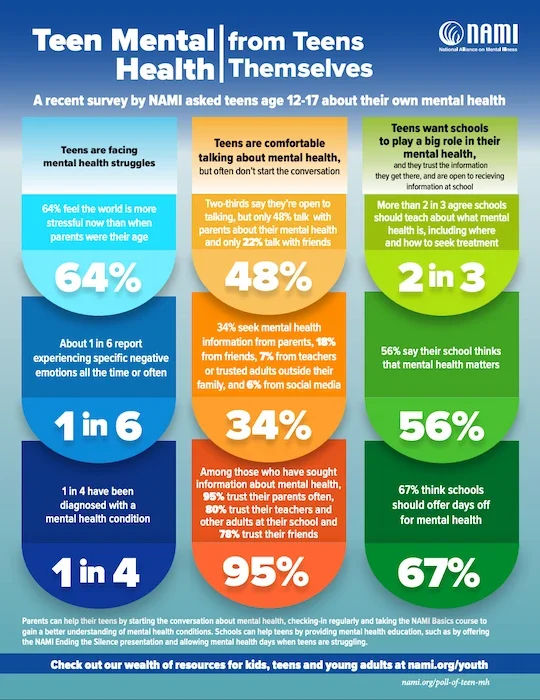
Teen therapy is far more common than many families realize. The emotional intensity of adolescence affects teens across the country, and the data reflects it. National surveys show rising stress, frequent negative emotions, and a growing number of teens seeking mental health support. These numbers remind both parents and teens that what you are experiencing is shared by many others and that reaching out is a normal and healthy step.
The Value of a Therapist Outside the Family System

Although teens often say they care about mental health, far fewer actually feel ready to talk openly with parents or friends. This communication gap is one of the most common challenges families face. While parents may want to be the first person their teen turns to, many teens feel safer opening up when emotions are less intense. Strong reactions, even supportive ones, can unintentionally push them to shut down. This does not reflect failure on anyone’s part. Instead, it highlights why having another trusted adult can be so valuable.
In addition, even with compassionate school staff, teens often need support that goes beyond what school environments can reasonably provide. A dedicated therapy space allows teens to slow down, feel understood, and build practical skills. Consistent counseling and group support offer the depth and stability that help teens gain confidence and navigate daily life with greater clarity and ease.
Teen therapy is not about replacing the bond between parents and their children. It is about reinforcing it. When teens have a nonjudgmental place to talk and parents receive guidance that helps them respond more effectively, the entire family benefits. There is genuine hope here and reading this means you have already taken an important first step!
How Therapy Creates Measurable Change for Teens
Research consistently shows that routine adolescent psychotherapy leads to real and measurable progress. Many teens experience noticeable decreases in anxiety, depression, and even early substance use concerns, with the biggest improvements often happening within the first six months.
These changes occur because therapy gives teens something unique: a trusting relationship with a neutral adult who has the specialized skills to help them manage stress, build coping strategies, and strengthen their self-esteem. That combination is powerful during a developmental stage that can feel unpredictable and overwhelming.
Teen therapy also offers a steady, calm space where adolescents can speak freely without worrying about disappointing or upsetting someone they love. Parents stay informed about safety and coping strategies, while teens get the support they need to navigate challenges more confidently.
What Teens and Parents Can Expect from the Therapy Process
Parents can expect a structured, safe environment where their teen practices practical skills for managing stress, anxiety, and complicated emotions. This support helps teens feel more grounded while also giving parents clarity on how to help at home.
Teens can expect a nonjudgmental space that feels steady and predictable, where they can talk openly about what is going on and begin making choices that line up with their personal values. Therapy becomes a place where they can slow down, reflect, and build insight.
Every session is tailored. No two look exactly alike because every teen brings different strengths, challenges, and goals. Therapists blend modalities and techniques based on what each adolescent needs at a given moment.
Research also tells us something important: regularity matters. Session frequency is one of the strongest predictors of progress. Whether a teen meets weekly, biweekly, or monthly, the consistent relationship makes the difference. At SIS Counseling, that reliability is a priority because we understand how quickly things can shift for adolescents.
Developing the Habits That Support Long-Term Well-Being

At SIS Counseling, a guiding quote in our work is, “Be careful how you speak to yourself, because you are always listening.” Therapy helps teens create some distance from their thoughts so they can understand, question, and reshape the way they talk to themselves.
This skill-building process boosts self-esteem, confidence, motivation, and emotional consistency. It acknowledges that liking yourself is not automatic. It is something that develops with practice.
The first step is noticing unhelpful patterns and harsh self-talk. Much like building muscle, developing healthier inner language takes repetition and support. Therapists act almost like personal trainers for emotional skills, helping teens strengthen habits that support long-term well-being.
Many young people we work with describe themselves as reformed perfectionists or say they finally understand how powerful their self-talk really is. Their experiences show that change is not only possible, but accessible, with the right support.
Your Privacy, Your Growth, Your Pace:
What to Expect in Therapy
Understanding Confidentiality and Your Safety
It is incredibly common for teens to worry that therapy means having everything shared with their parents, but that is not how it works! Therapists do not report back to parents about everyday conversations or personal details. The only things we share are serious safety concerns, ways parents can support you, or specific information you have asked us to pass along.
If something must be communicated for safety, it will never be behind your back. You will always know what is being shared and why. One of the best parts of therapy is that your privacy matters. Your secrets are not being spilled. We protect your confidentiality because therapy works best when you feel safe enough to be honest.
Therapy as a Place to Grow, Not a Sign Something Is Wrong
More teens than ever are starting therapy, and it has become a normal, healthy choice across all backgrounds. Therapy is not about fixing something “broken.” It is about learning new skills, understanding yourself, and making positive changes that help you feel more like the version of yourself you want to be.
At SIS Counseling, diagnoses are used only as a guide for your care, never as a label or a judgment. Nearly everyone can benefit from therapy, especially teens navigating emotional, social, and physical changes all at once. Wanting to grow is never a sign of weakness. It is a sign of strength.
Why Investing in Yourself Now Saves Time Later
Many teens feel overwhelmed by school, activities, and responsibilities. It may seem counterintuitive, but setting aside regular time for yourself often makes life easier, not harder. Therapy helps you build routines, tackle procrastination, manage perfectionism, and create healthier balance between school and your personal life.
Investing a little time now saves a lot of time later. Learning these skills early is especially helpful if you plan to pursue higher education, where independence and time management matter more than ever. Therapy becomes a tool that supports your success, not something that takes away from it.

Your Path to Support Begins Whenever You’re Ready
If you’re ready to explore teen therapy, we have therapists available for both in-person and online sessions to fit your family’s needs. A complimentary 15-minute consultation call is just one step away, offering a comfortable way for you and your teen to get a feel for what therapy could be like. If you’d prefer to start with a quick question or two, you’re always welcome to reach out by text or email. Whenever the time feels right, we’re here to support you in taking the next step toward clarity, connection, and growth!
Recent Posts